Home → Frequently Asked Questions
Water Damage FAQ — Bellevue WA Homeowners’ Most Common Questions Answered
IICRC-certified answers from Cascade Restoration Services — straight information, no sales pitch.
📞 Still have questions? Call (425) 555-1234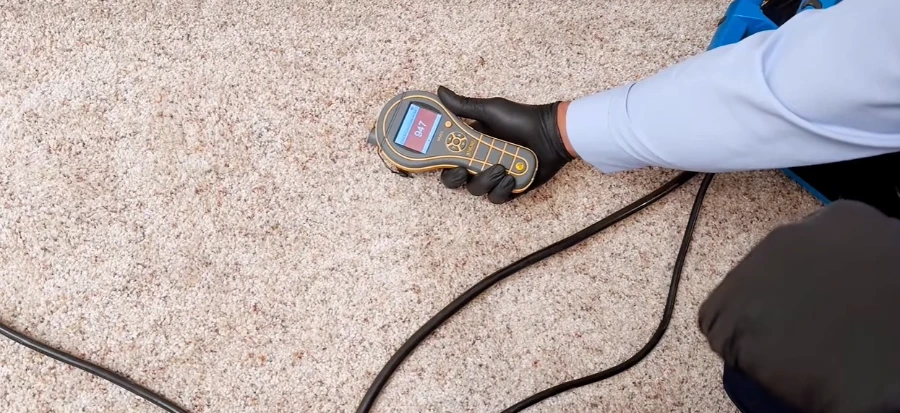
Water Damage Services Bellevue: Response, Costs, and Coverage
Our water damage services Bellevue homeowners most frequently ask about fall into four categories: response time, cost, insurance coverage, and technical process. We have answered every question we receive repeatedly below with the same directness our technicians use in the field.
How quickly can you respond to water damage in Bellevue?
Cascade Restoration targets a 60-minute response time across all Bellevue ZIP codes, 24 hours a day, 7 days a week, including holidays. We stage equipment at our 6400 Northup Way facility in Bellevue 98008. Response may extend to 75 minutes for outlying communities like Sammamish or Issaquah during peak traffic hours — we will tell you honestly when you call rather than promise and miss.
What does water damage restoration cost in Bellevue WA?
A single-room extraction and drying project in Bellevue typically runs $1,500 to $3,500. Multi-room losses with structural drying range $4,000 to $12,000. Mould remediation adds $2,000 to $8,000 depending on affected area. For most sudden plumbing events, the full cost is covered by homeowners insurance minus your deductible. We provide written estimates before starting any billable work.
Does homeowners insurance cover water damage in Washington State?
Yes, for sudden accidental events: burst pipes, appliance overflows, roof damage from a storm event. Standard Washington policies exclude flooding (requires separate NFIP or private flood policy), sewage backup (requires a specific endorsement), and damage from gradual leaks or maintenance neglect. See our complete insurance guide for claim filing strategies and how we handle adjuster coordination.
Can I stay in my home during water damage restoration?
For Category 1 losses (clean water) in a single room, most homeowners remain comfortably. Equipment runs continuously and is loud but not hazardous. For Category 2 or 3 events, mould remediation with containment barriers, or sewage cleanup, temporary relocation is recommended. Most Washington homeowners policies include Additional Living Expense coverage for displacement — we confirm applicability with your carrier during claim setup.
Technical Process Questions
How long does water damage drying take?
With IICRC S500 compliant equipment, most residential losses dry in 3 to 5 days. Class 1 losses in low-porosity materials can complete in 2 to 3 days. Class 4 losses involving dense materials like hardwood flooring, concrete, or brick veneer take 7 to 14 days. Drying is finished when calibrated moisture meters confirm all materials have reached their pre-loss equilibrium moisture content — not when a fixed number of days has elapsed.
What is the difference between water extraction and structural drying?
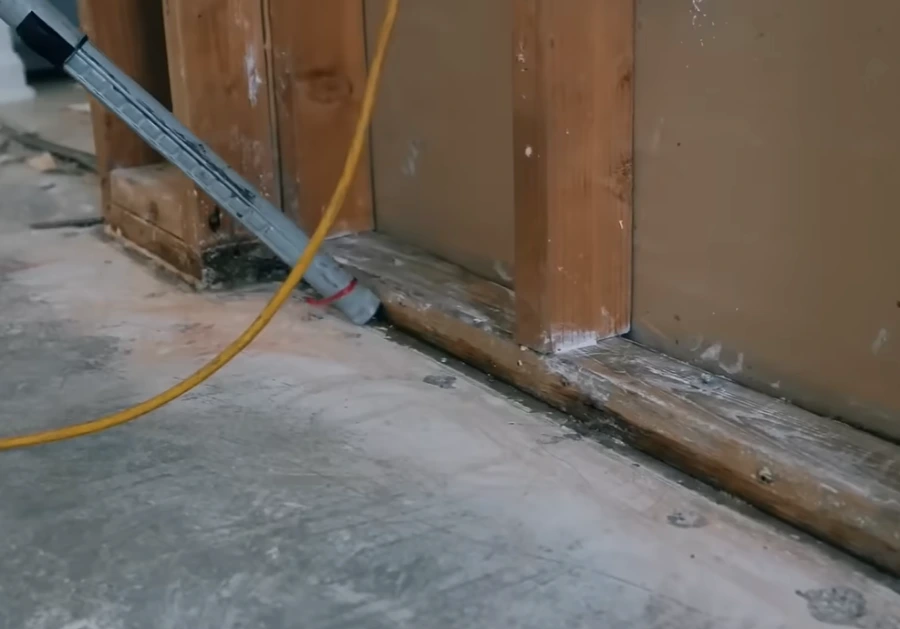
Extraction removes visible and pooled water using truck-mounted or portable units — this happens in the first hours. Structural drying removes moisture that has been absorbed into walls, flooring, subfloor, and framing. It uses commercial dehumidifiers, air movers, wall cavity drying systems, and hardwood drying mats over several days. Both steps are required for a complete restoration. Extraction without drying leaves structural moisture that causes mould and rot.
Is mould always present after water damage in Bellevue?
Not always, but Bellevue’s climate — typically 60–75% relative humidity from October through April — means mould can begin within 24 to 48 hours. Professional drying that reaches all affected materials within that window prevents mould in most cases. If response is delayed or materials are not fully dried, mould grows inside wall cavities and floor assemblies where it is not visible until significant damage has occurred.
Water Extraction Bellevue: Equipment and Process Questions
What equipment do you use for water extraction in Bellevue?
Our primary extraction equipment is a truck-mounted unit producing 200 PSI and 14-inch water lift — orders of magnitude more powerful than portable units. For areas inaccessible to the truck mount (upper floors, interior rooms), we deploy portable extraction units with equivalent per-unit output. For standing water, submersible pumps begin the process before the truck mount arrives.
Why can’t I just use fans to dry out my house?
Consumer fans move air but do not remove humidity from it. During Bellevue’s rainy season (roughly October through May), outdoor relative humidity routinely reaches 70–85%. Opening windows imports this humid air into the structure, slowing or reversing drying. Industrial LGR dehumidifiers actively reduce room humidity to 35–45%, creating the low-vapour-pressure environment that pulls moisture out of building materials. This is why IICRC S500 prohibits open-window ventilation in Class 2 and higher losses during high-humidity conditions.
How do you document water damage for insurance in Washington?
Before any extraction begins, we photograph and measure all affected surfaces, take calibrated moisture readings at standardised points, and produce a written scope of loss. During drying, we log moisture readings daily at the same points — creating a drying curve your adjuster can review. All documentation is provided in a written report at project completion and can be submitted directly to your carrier or attorney. See our insurance claims page for detail on direct carrier billing.
Your Question Not Answered Here?
Our IICRC-certified technicians answer calls 24/7 and can assess your specific situation in minutes — no automated menu, no call centre.
📞 Call (425) 555-1234 DirectlyCascade Restoration Services · 6400 Northup Way Suite 104, Bellevue WA 98008