How Long Does Water Damage Drying Take? (The IICRC-Based Answer)
How Long Does Water Damage Drying Take? Bellevue Homes by Material and Loss Class
The most common question Cascade Restoration receives after a water event in Bellevue is “How long is this going to take?” The answer depends on factors most homeowners have never considered — and the answer your water damage restoration Bellevue team gives you in the first hour is the most important number in your restoration project. This article explains what determines drying time, what the IICRC S500 standard defines as completion, and why Bellevue’s climate makes the choice of drying equipment matter more here than in most other Pacific Northwest cities.
Water Damage Services Bellevue: The IICRC Definition of “Dry”
Water damage services Bellevue property owners receive are only complete when every affected material returns to its pre-loss equilibrium moisture content (EMC) — the moisture level that material held before the water event, calibrated to local climate conditions. This is not a visual judgment. It is a number read from a calibrated moisture meter at standardised measurement points. In Bellevue, with our 50–55% average annual relative humidity, EMC for structural wood framing is typically 8–10%. For drywall, 0.4–0.6% on a Tramex CME5 reading. For concrete subfloor, <4.5%.
Drying is complete when every measurement point in the affected area reaches its EMC. Not when the room “feels dry.” Not when a fixed number of days has passed. Not when no visible water remains. The meter is the final word.
Water Extraction Bellevue: The Step Before Drying Begins
Drying time is directly related to how thoroughly water extraction Bellevue crews perform the initial extraction phase. Extraction removes free-standing water that dehumidifiers and air movers cannot efficiently process. A thorough truck-mounted extraction session that removes 80% of the water in carpet and pad can reduce total drying time by 1 to 2 days compared to inadequate extraction. This is why extraction equipment matters: a truck mount producing 200 PSI and 14-inch water lift removes significantly more water per pass than portable units, reducing the load the drying equipment carries for the following days.
Drying Time by IICRC Loss Class
The IICRC S500 classifies water damage by the amount of affected area and material types, which directly determines equipment requirements and drying duration.
| Class | Description | Bellevue Drying Time | Equipment Required |
|---|---|---|---|
| Class 1 | Partial room, low-porosity materials (vinyl, sealed concrete). Minimal moisture absorption. | 2–3 days | 1–2 dehumidifiers, 2–4 air movers |
| Class 2 | Entire room affected. Carpet, pad, and lower walls saturated. Moisture into structural materials. | 3–5 days | 1 LGR dehumidifier per 100–150 sq ft, air movers throughout |
| Class 3 | Ceiling, walls, subfloor all saturated. Highest volume of absorbed moisture. Often includes insulation. | 5–7 days | Multiple LGR dehumidifiers, Injectidry wall cavity system, HEPA filtration |
| Class 4 | Dense materials: hardwood flooring, concrete slab, brick, plaster. Special drying methods required. | 7–21 days | Hardwood drying mats, desiccant dehumidifiers, extended monitoring |
Drying Time by Material Type in Bellevue Homes
Material type is as important as loss class. Bellevue’s housing stock presents a range of material combinations that affect drying duration significantly.
- Carpet and pad: Pad is nearly always non-salvageable in Class 2+ events and is removed to allow subfloor drying. Carpet can sometimes be saved with rapid extraction. Drying subfloor after pad removal: 2–3 days for plywood, 4–7 for OSB (which absorbs and releases moisture more slowly).
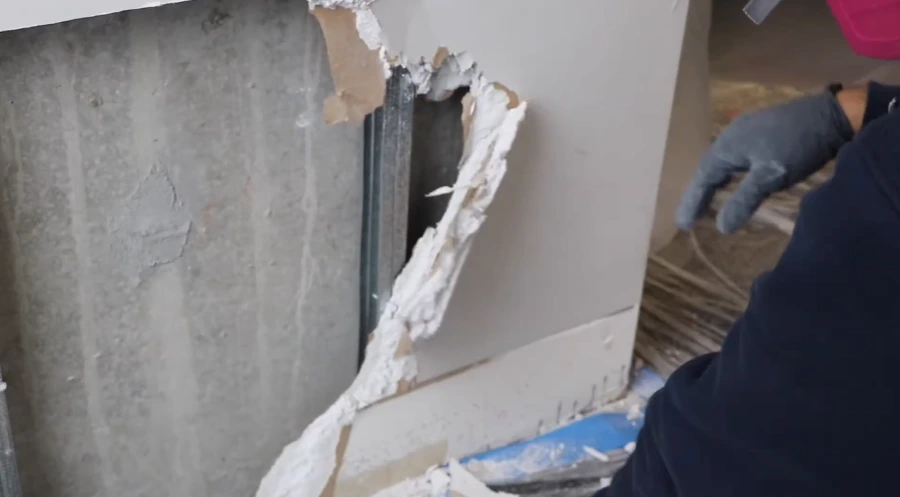
- Standard drywall (paper-faced gypsum): Paper facing and gypsum core both absorb water. Salvageable up to about 72 hours for Category 1 water if wall cavity drying is performed. Beyond that, removal is typically more cost-effective than drying in place.
- Hardwood flooring: The most variable material. A nail-down solid hardwood floor over a dry subfloor in a Class 1 event can sometimes be dried and saved using drying mats. The same floor over a wet subfloor in a Class 2 event will cup and require replacement. We assess within the first 24 hours and document our recommendation for your insurance carrier.
- Concrete slab: Concrete is rated by the IICRC as Class 4 because it holds moisture at depth. A slab at 8% moisture below grade can take 14–21 days to reach EMC with desiccant dehumidifiers and applied heat. This is a frequent scenario in Bellevue’s mid-century ranch homes and modern ground-floor condos.
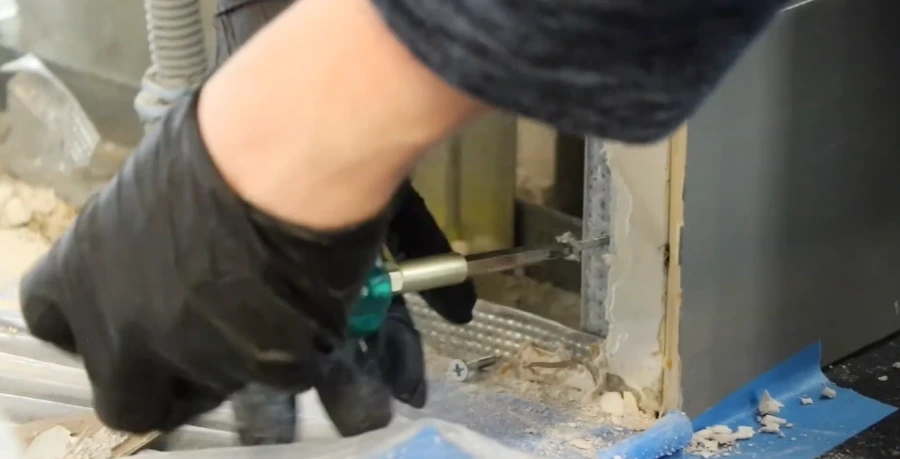
- Wood framing (2×4, LVL, engineered lumber): Framing dries at different rates depending on species, treatment, and whether it is enclosed behind drywall. Open framing with Injectidry wall cavity ports: 4–6 days for Class 2. Enclosed framing after drywall removal: 3–5 days.
Why Bellevue’s Climate Affects Drying Time
Drying speed is governed by the difference between the moisture in the air and the moisture in the material being dried — a concept called vapour pressure differential. When outdoor humidity is high (as it is in Bellevue from October through April, routinely 70–80% RH), the air cannot accept as much moisture from wet materials. Commercial LGR dehumidifiers overcome this by creating a low-humidity drying environment inside the structure regardless of outdoor conditions. Without commercial dehumidifiers, open-window ventilation during Bellevue’s rainy season imports high-humidity air and slows or reverses drying. This is why DIY drying with consumer equipment regularly fails in the Pacific Northwest.
The Daily Monitoring Process and When Drying Is Complete
IICRC S500-compliant drying requires daily moisture monitoring at standardised points, not a visual check at project end. Our process at every Bellevue project:
- Day 1: Baseline moisture readings recorded at all measurement points. Drying equipment placed per S500 formula. Psychrometric data (temperature, RH, specific humidity, dewpoint) documented.
- Days 2–N: Daily readings at the same points. Equipment adjusted if drying curve flattens (a plateau indicates either missed wet zones or insufficient equipment for the material type). Psychrometric data updated daily.
- Completion day: All points at or below EMC for the material type and Bellevue’s climate baseline. Written drying documentation provided for your insurance file.
If you are told a job is “done” after a fixed 3 days without a moisture meter reading, ask for the readings. Drying completion by timer is not IICRC S500 compliant and is the source of most secondary mould claims in this region.
Get IICRC S500 Certified Drying With Daily Documentation
Cascade Restoration Services provides written moisture logs for every project — the documentation your insurance carrier needs and your home’s future buyers deserve.
📞 Call (425) 555-1234 — 24/7Cascade Restoration Services · 6400 Northup Way Suite 104, Bellevue WA 98008